How to Re-Stripe an Overland Park Parking Lot for ADA Compliance
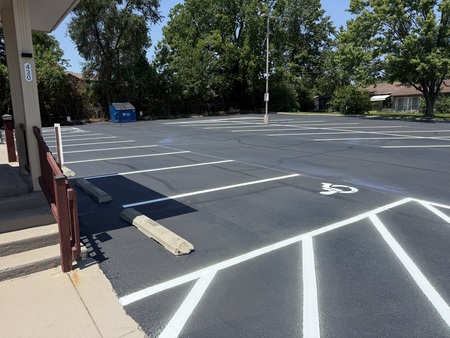
Fresh, accurate lines help drivers move safely, protect your business, and keep your site compliant. If you manage a center near Oak Park Mall, Corporate Woods, or along Metcalf Avenue, a clear plan for ADA-compliant re-striping is essential. This guide explains what property managers in Overland Park, KS should know about layout rules, Kansas expectations, and project phasing. For execution details and materials used on local sites, see our line striping service.
Why ADA-Compliant Line Striping Matters In Overland Park
ADA-compliant markings help every visitor park and travel safely, and they reduce risk for owners and tenants. Clear spaces, aisles, and signs prevent blocked ramps and fender benders, especially during the lunch rush along College Boulevard or weekend traffic near 119th Street.
In Kansas, most jurisdictions follow the 2010 ADA Standards and the Manual on Uniform Traffic Control Devices for signs and symbols. Local review can vary by city or county, so coordination with the authority having jurisdiction is wise before work begins and again at the final walkthrough.
Kansas ADA Stall Dimensions And Van-Accessible Markings
Most projects in Overland Park are reviewed using the federal ADA Standards, which Kansas jurisdictions generally accept. Use the dimensions below to plan a compliant layout, then verify details with the city if your site has unusual grades or shared lots.
- Standard accessible car stall: at least 96 inches wide with an adjacent access aisle at least 60 inches wide. Two spaces may share one aisle.
- Van-accessible option A: stall 132 inches wide with a 60-inch access aisle.
- Van-accessible option B: stall 96 inches wide with a 96-inch access aisle.
- Access aisles must be marked with diagonal hatch lines and connect to an accessible route with a running slope not steeper than 1:48.
- Signage: each accessible stall needs a sign with the International Symbol of Accessibility; van stalls include the “Van Accessible” designation. Mount the bottom of the sign at least 60 inches above the ground so it is visible when a vehicle is parked.
Do not paint the accessibility symbol in the access aisle. Keep aisles clear for lifts and passenger loading. Place the accessibility symbol at the head or center of each stall as allowed by the reviewing jurisdiction. Color selections for lines and symbols should be high contrast; blue backgrounds with a white symbol are commonly accepted in Johnson County, while line colors are typically white or yellow depending on direction and local standards.
How many accessible stalls do you need? The ADA provides a ratio by total space count. Examples that commonly apply to Overland Park retail and office lots include these thresholds:
- 1 to 25 total spaces: at least 1 accessible space
- 26 to 50 total spaces: at least 2 accessible spaces
- 51 to 75 total spaces: at least 3 accessible spaces
- 76 to 100 total spaces: at least 4 accessible spaces
- For every 6 accessible spaces, at least 1 must be van-accessible
Always confirm counts and layout with your local building department. Medical offices, rehabilitation clinics, and certain public facilities may require more accessible spaces than a typical retail lot.
High-Durability TTP-1952F Paint For Johnson County Winters
Winters in Johnson County bring freeze-thaw cycles, snow plows, and deicer. That is tough on paint. A high-solids, waterborne traffic paint meeting TTP-1952F has fast dry times, solid adhesion, and low VOCs. It accepts glass beads for retroreflectivity, which helps drivers see markings during early sunsets and wet pavement in late fall.
For durability in Overland Park:
- Apply at the manufacturer’s recommended mil thickness so the film survives plow abrasion.
- Add Type I or II glass beads to boost nighttime visibility and help tenants find ADA aisles and crosswalks faster.
- Keep the surface clean and dry. Dust, deicer residue, or oil in high-turnover areas like drive-throughs can shorten the life of the film.
Confirm overnight lows meet the paint spec or curing slows, and tracking can occur. Even “fast dry” waterborne products need the right temperature, humidity, and air movement to reach drive-on strength before the morning rush.
Phased Re-Striping Plan To Minimize Disruption
Busy centers in Overland Park cannot afford to close the whole lot. A phased plan keeps stores open, maintains ADA access, and reduces tenant complaints. Here is a simple approach that fits retail strips, office parks, and mixed-use sites:
- Pre-walk and map. Mark phasing zones that keep at least 50 percent of customer parking open. Identify the most convenient ADA path to the entrance for each phase.
- Notify tenants. Share dates and a simple site map a week ahead. Place temporary signs the day before each phase.
- Phase 1: ADA first. Re-stripe and sign the primary ADA cluster nearest the main entrance. Keep a compliant van space available throughout the project using cones and temp signage.
- Phase 2: High-traffic stalls. Complete the front row and drive lanes around entrances during off-peak hours to reduce conflicts.
- Phase 3: Perimeter stalls and overflow. Finish remote areas and loading zones. Paint crosswalks and stop bars last so they cure overnight.
- Return for arrows and detail work. Directional arrows, curb markings, and specialty symbols can be finished in a quick follow-up window.
Many centers run overnight or early morning phases midweek to minimize impact. Keep weather flexibility in the schedule so a quick cold snap does not push work into a weekend event or farmers’ market in Downtown Overland Park.
Common Layout Rules That Improve Traffic Flow
Good layout reduces confusion and cuts near-misses. If you are weighing parking lot re-striping layout rules for a refresh, consider these widely accepted practices that fit many Overland Park properties:
- Match stall angle to traffic patterns. 60-degree stalls are easy to enter in one-way aisles. 90-degree stalls maximize count where two-way traffic is important.
- Size drive aisles for the vehicles you expect. Two-way aisles are commonly planned around 22 to 24 feet, while one-way aisles run narrower depending on stall angle. Coordinate with your designer for truck routes and fire access.
- Mark crosswalks where pedestrians naturally walk. Add stop bars and arrows so delivery trucks and shoppers can predict movement.
- Protect ramps and routes. Keep accessible routes clear of wheel stops and door swings. Use hatch lines to create a buffer at curb ramps.
If you are updating an older site, align new markings with existing lighting, landscaping islands, and snow storage habits. Property managers in Corporate Woods, for example, often prefer arrows that guide vehicles to the main exit at College and Antioch to prevent mid-block U-turns.
Project Materials, Prep, And Weather Windows
Preparation drives durability. Pressure wash or mechanically clean the pavement, remove loose beads, and clear deicer residue. Tack rag oil spots if needed and verify the surface temperature before opening paint. TTP-1952F waterborne paint cures fast, but wind, humidity, and late-night temperature dips can stretch that window. In Overland Park, spring and early fall usually give the best balance of cure time and tenant traffic, with summer nights also workable if humidity is managed.
Your crew should check bead feed rates several times per phase, especially near entrances where braking and turning scuff lines the most. Night inspections help confirm reflectivity is even across handicapped symbols, stop bars, and crosswalks.
Documentation And Final Walkthrough
Before cones come up, walk the site with the plan set. Confirm stall counts, van designations, sign heights, and that access aisles connect to an accessible route. Photograph each ADA cluster and note the paint batch, ambient conditions, and bead spec. Keep a copy with your property records so future touch-ups match the same color and layout.
If you made field adjustments to improve flow, update the site map. That small step saves time the next time you order parking lot re-striping and helps new tenants understand delivery routes.
When To Schedule Your Next Re-Stripe In Overland Park
Timing depends on traffic volume, shade, snow removal, and the type of pavement mix. High-turnover retail near 95th and Quivira often needs fresh arrows and stop bars sooner than office parks south of 151st Street. Watch for faded hatch marks in access aisles, dull crosswalks, or arrows that are hard to see at dusk. Those are signs it is time to plan work within the next mild weather window.
For visibility online and off, reference your improvements with consistent language. Many property managers search for Overland Park parking lot striping when scheduling maintenance, and prospective tenants look for clear ADA access and safe drive lanes during site tours.
If you serve customers beyond the state line, the same fundamentals apply across the metro. Specifications change by jurisdiction, but the big goals are identical: safe access, readable markings, and smooth traffic flow. That is the heart of commercial line striping in Kansas and the Kansas City region.
Get Professional Line Striping In Overland Park
For trusted Overland Park parking lot striping, call Gorman Sealcoating & Striping today for a code-compliant re-stripe. Our crews plan phasing that keeps businesses open, select durable TTP-1952F paint with proper beads, and align your layout with ADA requirements accepted in Kansas. Reach our team at 913-626-7769 to discuss timing and scope.
If you are ready to move from plan to pavement, our specialists can review your site map, confirm ADA stall counts, and set a weather-ready schedule. Learn more about our process on the line striping service page, or explore the benefits of a full maintenance plan starting from the home page for Gorman Sealcoating & Striping.